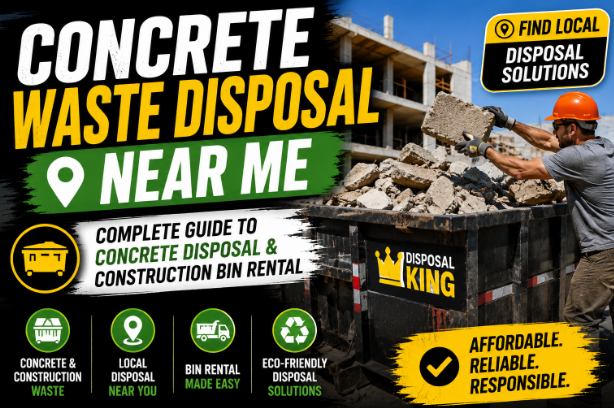
Concrete removal is one of the most challenging parts of construction, demolition, landscaping, and renovation projects.
Unlike regular household garbage, concrete is:
-
Extremely heavy
-
Difficult to transport
-
Often recyclable
-
Subject to weight and handling requirements
Whether you are removing:
-
Concrete slabs
-
Sidewalks
-
Driveways
-
Foundations
-
Concrete blocks
-
Construction rubble
finding the right concrete disposal solution can save time, labor, and disposal costs.
For dedicated disposal services and material guidance, visit: https://www.disposalking.com/materials/concrete-recycling-disposal/
What Is Concrete Waste?
Concrete waste refers to material generated from:
-
Demolition projects
-
Construction sites
-
Sidewalk removal
-
Driveway replacement
-
Concrete cutting
-
Landscaping projects
Concrete consists primarily of cement, water, and aggregate materials that harden into durable construction material.
Why Concrete Should Not Go Into Regular Garbage
Concrete disposal requires different handling than household waste because:
-
Weight limits may apply
-
Transport equipment must support heavy loads
-
Recycling opportunities may exist
-
Construction waste often follows separate disposal processes
Proper handling can reduce landfill use and support recycling initiatives.
Concrete Disposal Options
There are several ways to dispose of concrete depending on project size.
1. Construction Waste Bin Rental
Construction waste bins are one of the most convenient options for:
-
Renovations
-
Demolition projects
-
Driveway replacement
-
Commercial construction
Benefits
-
Convenient loading
-
Reduced transportation
-
Faster cleanup
-
Flexible project schedules
Construction bins are especially useful for large volumes of heavy debris.
2. Concrete Recycling Facilities
Concrete recycling allows old material to be processed into reusable aggregate.
Recycled concrete may later be used for:
-
Road base
-
Construction fill
-
Landscaping applications
-
Aggregate production
3. Self-Haul Concrete Disposal
For small projects, some property owners transport concrete directly to approved facilities.
Best for:
-
Limited quantities
-
Small demolition jobs
-
DIY projects
Concrete Waste Bin Rental: Choosing the Right Size
Selecting the correct bin helps prevent overload.
10 Yard Bin
Best for:
-
Small concrete removal
-
Landscaping projects
-
Sidewalk sections
20 Yard Bin
Recommended for:
-
Driveway replacement
-
Renovation debris
-
Medium demolition projects
30 Yard Bin
Ideal for:
-
Commercial demolition
-
Large foundations
-
Major construction waste
Heavy materials may require lower fill levels regardless of bin volume.
What Materials Can Usually Go With Concrete?
Depending on provider policies, concrete loads may include:
Accepted Materials
-
Concrete chunks
-
Sidewalk material
-
Concrete slabs
-
Pavers
-
Masonry
-
Brick
Materials Often Requiring Separation
-
Wood
-
Drywall
-
Soil
-
Asphalt
-
Hazardous materials
Always confirm material requirements before loading.
Why Concrete Recycling Matters
Concrete recycling offers several benefits.
Reduced Landfill Use
Recycling helps divert construction waste.
Material Recovery
Processed concrete can become reusable aggregate.
Lower Transportation Demand
Local recycling reduces hauling requirements.
Common Concrete Disposal Mistakes
Avoid these issues.
Mixing Materials
Mixed debris may increase disposal costs.
Overloading Bins
Concrete weight accumulates quickly.
Underestimating Volume
Many projects generate more debris than expected.
Ignoring Weight Restrictions
Concrete projects often require special hauling considerations.
Construction Waste Bin Rental: When It Makes Sense
Renting a disposal bin is often ideal when projects involve:
-
Continuous demolition
-
Large material quantities
-
Multiple work phases
-
Limited transportation capacity
Construction waste bins simplify cleanup while improving site organization.
Tips for Easier Concrete Disposal
Break Concrete into Smaller Pieces
Smaller sections improve loading efficiency.
Separate Materials Early
Keep:
-
Concrete
-
Wood
-
Metal
-
General debris
separated whenever possible.
Plan Bin Placement
Ensure:
-
Delivery access
-
Safe loading
-
Stable ground
Concrete Disposal vs Recycling
Disposal
Goal:
-
Remove unusable material
Recycling
Goal:
-
Recover concrete for future use
Recovered concrete is commonly crushed and reused in construction and infrastructure projects.
Final Thoughts
Concrete waste removal becomes easier when you choose the right disposal strategy.
Whether you need:
-
Concrete waste disposal near me
-
Concrete disposal
-
Construction waste bin rental
-
Heavy debris removal
successful disposal depends on:
-
Project size
-
Material weight
-
Recycling opportunities
-
Efficient transportation planning
For larger projects, dedicated construction waste bins often provide the fastest and most efficient solution.
Frequently Asked Questions
Can concrete go into a regular garbage bin?
Usually not. Concrete often requires separate handling because of weight and recycling requirements.
Is concrete recyclable?
Yes. Crushed concrete is commonly reused as aggregate and road base material.
What size bin works best for concrete?
Smaller bins are often used for heavy materials, although project size matters.
Can mixed construction waste be placed with concrete?
Some facilities require separation before disposal.
Is recycling cheaper than disposal?
Depending on the project and location, recycling may reduce overall disposal costs.